














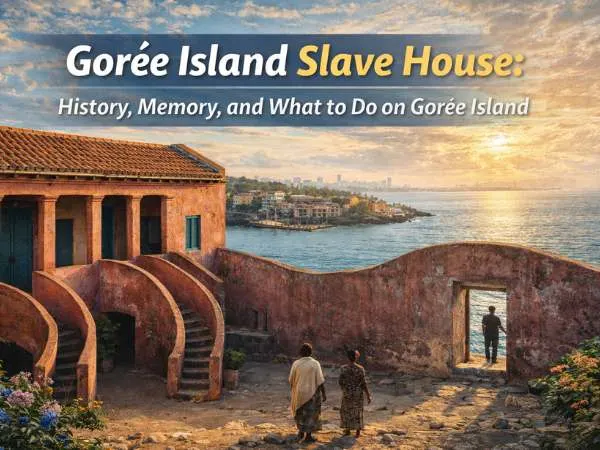
The Gorée Island slave house stands in silence, facing the Atlantic Ocean. From a distance, it looks calm. Soft colors. Blue doors. Stone walls warmed by sun. Up close, the meaning changes. This place carries weight. Every step echoes with stories that never fully leave.
Gorée Island is small. You can walk across it in minutes. Yet its history stretches across centuries and across continents. For many visitors, the House of Slaves on Gorée Island is not just a historical site. It is a moment of reckoning.
This guide explains Gorée Island and the House of Slavery clearly and honestly. You’ll learn what the site is, why it matters, what to do on Gorée Island, and how to visit with respect and understanding.
Where Gorée Island Is Located
Gorée Island sits just off the coast of Dakar, Senegal. The ferry ride takes about twenty minutes. From the water, the island looks peaceful. Colorful colonial buildings line narrow streets. Bougainvillea spills over stone walls.
That beauty contrasts sharply with the island’s past.
Gorée Island was used for centuries as a holding point in the transatlantic slave trade. European powers controlled the island at different times, including the Portuguese, Dutch, French, and British.
Gorée Island and the Transatlantic Slave Trade
From the 15th to the 19th century, millions of Africans were forcibly taken from their homes and transported across the Atlantic. Gorée Island became one of the symbolic centers of this system.
Men, women, and children were captured inland, marched to the coast, imprisoned, and shipped overseas. Many never survived the journey. Many never saw their families again.
The island represents both a physical location and a shared memory of loss.
also read : – Tips for Making the Most of Your Family Trip
Gorée Island House of Slaves: What It Is
The Gorée Island House of Slaves, also called the House of Slavery, is the most visited site on the island.
Built in the late 18th century, the structure served as a holding house where enslaved Africans were confined before being forced onto ships bound for the Americas.
Today, it operates as a museum and memorial.
Gorée Island – House of Slavery: Inside the Building
Walking into the House of Slaves feels different from entering a typical museum. The air feels heavy. The rooms are small. Light barely enters.
The ground floor contains narrow cells. Each cell once held groups of people separated by age and gender.
- Men were confined in one area
- Women in another
- Children in smaller spaces
Iron rings remain embedded in the walls. The floors are worn smooth.
Upstairs, rooms once used by traders overlook the courtyard. The contrast is impossible to miss.
The Door of No Return
At the back of the building stands the most famous feature: the Door of No Return.
This doorway opens directly onto the ocean. Through it, enslaved people were led onto boats, beginning a journey that would separate them forever from their homeland.
Standing there, you hear waves. The sound has not changed. The meaning has.
For many visitors, this is the emotional center of the site.
Historical Debate Around the House of Slaves
Scholars have debated the exact number of people held and transported from this specific building. Some argue that Gorée Island served more as a regional trading post than a massive export center compared to other ports.
That debate does not erase the suffering represented here.
The House of Slaves has become a symbol. Symbols carry meaning beyond numbers.
Why the Gorée Island Slave House Matters Today
This site matters because memory matters.
The House of Slaves:
- honors victims of slavery
- confronts visitors with human cost
- challenges historical denial
- connects Africa to its global diaspora
It reminds people that slavery was not abstract. It was lived, felt, and endured by real individuals.
Gorée Island as a UNESCO World Heritage Site
In 1978, Gorée Island was designated a UNESCO World Heritage Site. This status recognizes the island’s global historical importance.
Preservation ensures future generations can learn, reflect, and remember.
What to Do in Gorée Island Beyond the Slave House
While the House of Slaves anchors the island’s history, Gorée Island offers more to explore.
Walk the Island Slowly
Cars are not allowed. Walking feels natural. Stone paths lead past pastel houses, art studios, and small cafes.
Every corner feels lived-in.
Visit the Gorée Museum
The IFAN Museum of African Arts on Gorée Island provides broader context. Exhibits cover African history, culture, and resistance.
This helps place the House of Slaves within a wider story.
Explore the Castel
At the highest point of the island sits the Castel, a former military fort. The walk up offers views of Dakar and the Atlantic.
The fort shows how Gorée Island was also a strategic military site.
Talk With Local Artists
Many residents sell paintings, sculptures, and crafts. Much of the art reflects memory, identity, and resilience.
Buying directly supports the island’s community.
Sit and Reflect by the Water
Some visitors need quiet time after visiting the House of Slaves. Benches near the shore offer space to process.
Reflection feels appropriate here.
Daily Life on Gorée Island Today
About a thousand people live on Gorée Island. Children play in courtyards. Laundry hangs from balconies. Life continues.
This coexistence of daily life and heavy history defines the island’s atmosphere.
It is not frozen in the past. It carries it.
also read : – The Top Things To Do in Oslo
Visiting the Gorée Island Slave House Respectfully
Respect matters deeply at this site.
Helpful guidelines include:
- dress modestly
- speak quietly inside
- avoid posing for casual photos
- listen carefully to guides
This is not a backdrop. It is a memorial.
Guided Tours vs Self-Guided Visits
Guided tours provide historical detail and emotional context. Local guides often share stories passed down through generations.
Self-guided visits allow quiet reflection but may lack depth.
Many visitors choose both: a tour, then time alone.
Emotional Impact of Visiting the House of Slaves
Reactions vary. Some feel grief. Others feel anger. Many feel silence.
There is no right response.
The experience stays with people long after leaving the island.
Gorée Island and the African Diaspora
For many in the African diaspora, visiting Gorée Island feels deeply personal. It connects ancestry to place.
Several world leaders and public figures have visited the site, acknowledging its importance in global history.
Education and Memory Preservation
Schools in Senegal and beyond use Gorée Island as a teaching site. Learning here moves history out of textbooks and into physical space.
Memory becomes tangible.
Tourism and Responsibility
Tourism brings income to the island but also raises concerns about commercialization.
Balancing education, respect, and economic support remains an ongoing effort.
Visitors play a role in that balance.
How to Get to Gorée Island
Ferries depart regularly from Dakar’s port. The ride takes about twenty minutes.
Tickets are affordable. Boats run throughout the day, weather permitting.
Arrive early to avoid crowds.
Best Time to Visit Gorée Island
Mornings tend to feel quieter. Weekdays see fewer visitors than weekends.
Weather stays warm year-round. Bring water and sun protection.
Photography on Gorée Island
Photography is allowed in many areas, but discretion matters inside the House of Slaves.
Ask before photographing people.
Some moments deserve memory, not images.
Gorée Island Slave House in Global Memory
The House of Slaves stands alongside other major memorials of human suffering worldwide. It represents a shared responsibility to remember.
Forgetting allows repetition. Remembering invites change.
Why People Leave Changed
People leave Gorée Island quieter than they arrived. Conversations slow. Thoughts turn inward.
That response reflects the site’s power.
It asks visitors to witness, not consume.
The Meaning of Return
The Door of No Return carries symbolic weight. Yet visitors walk back through the building and leave the island.
That contrast reminds many of the freedom they carry and the cost others paid.
Final Words on Gorée Island Slave House
The Gorée Island slave house is not just a historical landmark. It is a place of memory, mourning, and reflection. It tells a story that cannot be softened or rushed.
Gorée Island invites visitors to slow down, listen, and remember. What you do with that memory after leaving matters just as much as the visit itself.
also read : – Barcelona’s Top Tourist Attractions That Will Make You Fall In Love With The City
FAQs: Gorée Island Slave House
What is the Gorée Island House of Slaves
It is a historic building used to hold enslaved Africans before forced transport during the transatlantic slave trade.
Where is Gorée Island located
Off the coast of Dakar, Senegal.
What is the Door of No Return
A doorway through which enslaved people were taken to ships bound for the Americas.
What else can you do on Gorée Island
Visit museums, walk the island, explore the Castel, and engage with local art.
Is Gorée Island worth visiting
Yes, for those seeking historical understanding and reflection.
How long should you spend on Gorée Island
Half a day allows time for the House of Slaves and quiet exploration.